Foodborne illness (also foodborne disease and colloquially referred to as food poisoning) is any illness resulting from the food spoilage of contaminated food, pathogenic bacteria, viruses, or parasites that contaminate food, as well as toxins such as poisonous mushrooms and various species of beans that have not been boiled for at least 10 minutes.
Symptoms vary depending on the cause, and are described below in this article. A few broad generalizations can be made, e.g.: The incubation period ranges from hours to days, depending on the cause and on how much was consumed. The incubation period tends to cause sufferers to not associate the symptoms with the item consumed, and so to cause sufferers to attribute the symptoms to gastroenteritis for example.
Symptoms often include vomiting, fever, and aches, and may include diarrhea. Bouts of vomiting can be repeated with an extended delay in between, because even if infected food was eliminated from the stomach in the first bout, microbes (if applicable) can pass through the stomach into the intestine via cells lining the intestinal walls and begin to multiply. Some types of microbes stay in the intestine, some produce a toxin that is absorbed into the bloodstream, and some can directly invade deeper body tissues.
Foodborne illness usually arises from improper handling, preparation, or food storage. Good hygiene practices before, during, and after food preparation can reduce the chances of contracting an illness. There is a consensus in the public health community that regular hand-washing is one of the most effective defenses against the spread of foodborne illness. The action of monitoring food to ensure that it will not cause foodborne illness is known as food safety. Foodborne disease can also be caused by a large variety of toxins that affect the environment.
Furthermore, foodborne illness can be caused by pesticides or medicines in food and natural toxic substances such as poisonous mushrooms or reef fish.
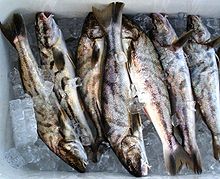 Prevention is mainly the role of the state, through the definition of strict rules of hygiene and a public services of veterinary surveying of animal products in the food chain, from farming to the transformation industry and delivery (shops and restaurants). This regulation includes:
Bacteria
Bacteria are a common cause of foodborne illness. In the United Kingdom during 2000, the individual bacteria involved were the following: Campylobacter jejuni 77.3%, Salmonella 20.9%, Escherichia coli O157:H7 1.4%, and all others less than 0.56%.[4] In the past, bacterial infections were thought to be more prevalent because few places had the capability to test for norovirus and no active surveillance was being done for this particular agent. Toxins from bacterial infections are delayed because the bacteria need time to multiply. As a result, symptoms associated with intoxication are usually not seen until 12–72 hours or more after eating contaminated food. However, in some cases, such as Staphylococcal food poisoning, the onset of illness can be as soon as 30 minutes after ingesting contaminated food. Most common bacterial foodborne pathogens are:- Campylobacter jejuni which can lead to secondary Guillain–Barré syndrome and periodontitis
- Clostridium perfringens, the cafeteria germ
- Salmonella spp. – its S. typhimurium infection is caused by consumption of eggs or poultry that are not adequately cooked or by other interactive human-animal pathogens
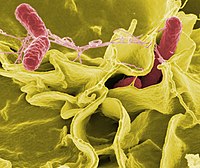 Salmonella
 - Escherichia coli O157:H7 enterohemorrhagic (EHEC) which can cause hemolytic-uremic syndrome
- Bacillus cereus
- Escherichia coli, other virulence properties, such as enteroinvasive (EIEC), enteropathogenic (EPEC), enterotoxigenic (ETEC), enteroaggregative (EAEC or EAgEC)
- Listeria monocytogenes
- Shigella spp.
- Staphylococcus aureus
- Staphylococcal enteritis
- Streptococcus
- Vibrio cholerae, including O1 and non-O1
- Vibrio parahaemolyticus
- Vibrio vulnificus
- Yersinia enterocolitica and Yersinia pseudotuberculosis
- Brucella spp.
- Corynebacterium ulcerans
- Coxiella burnetii or Q fever
- Plesiomonas shigelloides
Enterotoxins
In addition to disease caused by direct bacterial infection, some foodborne illnesses are caused by enterotoxins (exotoxins targeting the intestines). Enterotoxins can produce illness even when the microbes that produced them have been killed. Symptom appearance varies with the toxin but may be rapid in onset, as in the case of enterotoxins of Staphylococcus aureus in which symptoms appear in one to six hours. This causes intense vomiting including or not including diarrhea (resulting in staphylococcal enteritis), and staphylococcal enterotoxins (most commonly staphylococcal enterotoxin A but also including staphylococcal enterotoxin B) are the most commonly reported enterotoxins although cases of poisoning are likely underestimated. It occurs mainly in cooked and processed foods due to competition with other biota in raw foods, and humans are the main cause of contamination as a substantial percentage of humans are persistent carriers of S. aureus. The CDC has estimated about 240,000 cases per year in the United States.- Clostridium botulinum
- Clostridium perfringens
- Bacillus cereus
Emerging foodborne pathogens
Many foodborne illnesses remain poorly understood.- Aeromonas hydrophila, Aeromonas caviae, Aeromonas sobria
Preventing bacterial food poisoning
Proper storage and refrigeration of food help in the prevention of food poisoning
- traceability: in a final product, it must be possible to know the origin of the ingredients (originating farm, identification of the harvesting or of the animal) and where and when it was processed; the origin of the illness can thus be tracked and solved (and possibly penalized), and the final products can be removed from the sale if a problem is detected;
- enforcement of hygiene procedures such as HACCP and the cold chain;
- power of control and of law enforcement of veterinarians.
Mycotoxins and alimentary mycotoxicoses
The term alimentary mycotoxicoses refers to the effect of poisoning by Mycotoxins (The term mycotoxin is usually reserved for the toxic chemical products produced by fungi that readily colonize crops) through food consumption. Mycotoxins sometimes have important effects on human and animal health. For example, an outbreak which occurred in the UK in 1960 caused the death of 100,000 turkeys which had consumed aflatoxin-contaminated peanut meal. In the USSR in World War II, 5,000 people died due to Alimentary Toxic Aleukia (ALA). The common foodborne Mycotoxins include:- Aflatoxins – originated from Aspergillus parasiticus and Aspergillus flavus. They are frequently found in tree nuts, peanuts, maize, sorghum and other oilseeds, including corn and cottonseeds. The pronounced forms of Aflatoxins are those of B1, B2, G1, and G2, amongst which Aflatoxin B1 predominantly targets the liver, which will result in necrosis, cirrhosis, and carcinoma. In the US, the acceptable level of total aflatoxins in foods is less than 20 μg/kg, except for Aflatoxin M1 in milk, which should be less than 0.5 μg/kg. The official document can be found at FDAs website.
- Altertoxins – are those of Alternariol (AOH), Alternariol methyl ether (AME), Altenuene (ALT), Altertoxin-1 (ATX-1), Tenuazonic acid (TeA) and Radicinin (RAD), originated from Alternaria spp. Some of the toxins can be present in sorghum, ragi, wheat and tomatoes. Some research has shown that the toxins can be easily cross-contaminated between grain commodities, suggesting that manufacturing and storage of grain commodities is a critical practice.
- Citrinin
- Citreoviridin
- Cyclopiazonic acid
- Cytochalasins
- Ergot alkaloids / Ergopeptine alkaloids – Ergotamine
- Fumonisins – Crop corn can be easily contaminated by the fungi Fusarium moniliforme, and its Fumonisin B1 will cause Leukoencephalomalacia (LEM) in horses, Pulmonary edema syndrome (PES) in pigs, liver cancer in rats and Esophageal cancer in humans. For human and animal health, both the FDA and the EC have regulated the content levels of toxins in food and animal feed.
- Fusaric acid
- Fusarochromanone
- Kojic acid
- Lolitrem alkaloids
- Moniliformin
- 3-Nitropropionic acid
- Nivalenol
- Ochratoxins – In Australia, The Limit of Reporting (LOR) level for Ochratoxin A (OTA) analyses in 20th Australian Total Diet Survey was 1 µg/kg, whereas the EC restricts the content of OTA to 5 µg/kg in cereal commodities, 3 µg/kg in processed products and 10 µg/kg in dried vine fruits.
- Oosporeine
- Patulin – Currently, this toxin has been advisably regulated on fruit products. The EC and the FDA have limited it to under 50 µg/kg for fruit juice and fruit nectar, while limits of 25 µg/kg for solid-contained fruit products and 10 µg/kg for baby foods were specified by the EC.
- Phomopsins
- Sporidesmin A
- Sterigmatocystin
- Tremorgenic mycotoxins – Five of them have been reported to be associated with molds found in fermented meats. These are Fumitremorgen B, Paxilline, Penitrem A, Verrucosidin, and Verruculogen.
- Trichothecenes – sourced from Cephalosporium, Fusarium, Myrothecium, Stachybotrys and Trichoderma. The toxins are usually found in molded maize, wheat, corn, peanuts and rice, or animal feed of hay and straw.[35] Four trichothecenes, T-2 toxin, HT-2 toxin, diacetoxyscirpenol (DAS) and deoxynivalenol (DON) have been most commonly encountered by humans and animals. The consequences of oral intake of, or dermal exposure to, the toxins will result in Alimentary toxic aleukia, neutropenia, aplastic anemia, thrombocytopenia and/or skin irritation.[37][38][39] In 1993, the FDA issued a document for the content limits of DON in food and animal feed at an advisory level. In 2003, US published a patent that is very promising for farmers to produce a trichothecene-resistant crop.
- Zearalenone
- Zearalenols
Viruses
Viral infections make up perhaps one third of cases of food poisoning in developed countries. In the US, more than 50% of cases are viral and noroviruses are the most common foodborne illness, causing 57% of outbreaks in 2004. Foodborne viral infection are usually of intermediate (1–3 days) incubation period, causing illnesses which are self-limited in otherwise healthy individuals; they are similar to the bacterial forms described above.- Enterovirus
- Hepatitis A is distinguished from other viral causes by its prolonged (2–6 week) incubation period and its ability to spread beyond the stomach and intestines into the liver. It often results in jaundice, or yellowing of the skin, but rarely leads to chronic liver dysfunction. The virus has been found to cause infection due to the consumption of fresh-cut produce which has fecal contamination.
- Hepatitis E
- Norovirus
- Rotavirus
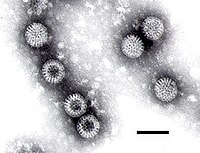 Rotavirus
Parasites[edit]
Most foodborne parasites are zoonoses.- Platyhelminthes:
- Diphyllobothrium sp.
- Nanophyetus sp.
- Taenia saginata
- Taenia solium
- Fasciola hepatica
- See also: Tapeworm and Flatworm
- Nematode:
- Anisakis sp.
- Ascaris lumbricoides
- Eustrongylides sp.
- Trichinella spiralis
- Trichuris trichiura
- Protozoa:
- Acanthamoeba and other free-living amoebae
- Cryptosporidium parvum
- Cyclospora cayetanensis
- Entamoeba histolytica
- Giardia lamblia
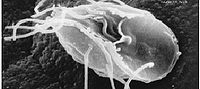 Giardia lamblia
 - Sarcocystis hominis
- Sarcocystis suihominis
- Toxoplasma gondii
Natural toxins
Several foods can naturally contain toxins, many of which are not produced by bacteria. Plants in particular may be toxic; animals which are naturally poisonous to eat are rare. In evolutionary terms, animals can escape being eaten by fleeing; plants can use only passive defenses such as poisons and distasteful substances, for example capsaicin in chili peppers and pungent sulfur compounds in garlic and onions. Most animal poisons are not synthesised by the animal, but acquired by eating poisonous plants to which the animal is immune, or by bacterial action.- Alkaloids
- Ciguatera poisoning
- Grayanotoxin (honey intoxication)
- Mushroom toxins
- Phytohaemagglutinin (red kidney bean poisoning; destroyed by boiling)
- Pyrrolizidine alkaloids
- Shellfish toxin, including paralytic shellfish poisoning, diarrhetic shellfish poisoning, neurotoxic shellfish poisoning, amnesic shellfish poisoning and ciguatera fish poisoning
- Scombrotoxin
- Tetrodotoxin (fugu fish poisoning)
- Foxglove contains cardiac glycosides.
- Poisonous hemlock (conium) has medicinal uses.
Other pathogenic agents
- Prions, resulting in Creutzfeldt–Jakob disease (CJD) and its variant (vCJD)
Ptomaine poisoning
In 1883, the Italian, Professor Salmi, of Bologna, introduced the generic name ptomaine (from Greek ptōma, fall, fallen body, corpse) for alkaloids found in decaying animal and vegetable matter, especially (as reflected in their names) putrescine and cadaverine. The 1892 Mercks Bulletin stated, We name such products of bacterial origin ptomaines; and the special alkaloid produced by the comma bacillus is variously named Cadaverine, Putrescine, etc. While The Lancet stated, The chemical ferments produced in the system, the...ptomaines which may exercise so disastrous an influence. It is now known that the disastrous...influence is due to the direct action of bacteria and only slightly to the alkaloids. Thus, the use of the phrase ptomaine poisoning is now obsolete. Tainted potato salad sickening hundreds at a Communist political convention in Massillon, Ohio, and aboard a Washington DC cruise boat in separate incidents during a single week in 1932 drew national attention to the dangers of so-called ptomaine poisoning in the pages of the American news weekly, Time.Another newspaper article from 1944 told of more than 150 persons being hospitalized in Chicago with ptomaine poisoning apparently from rice pudding served by a chain of restaurants.Loading ad...
Foodborne illness (also foodborne disease and colloquially referred to as food poisoning) is any illness resulting from the food spoilage of contaminated food, pathogenic bacteria, viruses, or parasites that contaminate food, as well as toxins such as poisonous mushrooms and various species of beans that have not been boiled for at least 10 minutes.
Symptoms vary depending on the cause, and are described below in this article. A few broad generalizations can be made, e.g.: The incubation period ranges from hours to days, depending on the cause and on how much was consumed. The incubation period tends to cause sufferers to not associate the symptoms with the item consumed, and so to cause sufferers to attribute the symptoms to gastroenteritis for example.
Symptoms often include vomiting, fever, and aches, and may include diarrhea. Bouts of vomiting can be repeated with an extended delay in between, because even if infected food was eliminated from the stomach in the first bout, microbes (if applicable) can pass through the stomach into the intestine via cells lining the intestinal walls and begin to multiply. Some types of microbes stay in the intestine, some produce a toxin that is absorbed into the bloodstream, and some can directly invade deeper body tissues.
Foodborne illness usually arises from improper handling, preparation, or food storage. Good hygiene practices before, during, and after food preparation can reduce the chances of contracting an illness. There is a consensus in the public health community that regular hand-washing is one of the most effective defenses against the spread of foodborne illness. The action of monitoring food to ensure that it will not cause foodborne illness is known as food safety. Foodborne disease can also be caused by a large variety of toxins that affect the environment.
Furthermore, foodborne illness can be caused by pesticides or medicines in food and natural toxic substances such as poisonous mushrooms or reef fish.
Prevention is mainly the role of the state, through the definition of strict rules of hygiene and a public services of veterinary surveying of animal products in the food chain, from farming to the transformation industry and delivery (shops and restaurants). This regulation includes:
Bacteria
Bacteria are a common cause of foodborne illness. In the United Kingdom during 2000, the individual bacteria involved were the following: Campylobacter jejuni 77.3%, Salmonella 20.9%, Escherichia coli O157:H7 1.4%, and all others less than 0.56%.[4] In the past, bacterial infections were thought to be more prevalent because few places had the capability to test for norovirus and no active surveillance was being done for this particular agent. Toxins from bacterial infections are delayed because the bacteria need time to multiply. As a result, symptoms associated with intoxication are usually not seen until 12–72 hours or more after eating contaminated food. However, in some cases, such as Staphylococcal food poisoning, the onset of illness can be as soon as 30 minutes after ingesting contaminated food. Most common bacterial foodborne pathogens are:- Campylobacter jejuni which can lead to secondary Guillain–Barré syndrome and periodontitis
- Clostridium perfringens, the cafeteria germ
- Salmonella spp. – its S. typhimurium infection is caused by consumption of eggs or poultry that are not adequately cooked or by other interactive human-animal pathogens
Salmonella
- Escherichia coli O157:H7 enterohemorrhagic (EHEC) which can cause hemolytic-uremic syndrome
- Bacillus cereus
- Escherichia coli, other virulence properties, such as enteroinvasive (EIEC), enteropathogenic (EPEC), enterotoxigenic (ETEC), enteroaggregative (EAEC or EAgEC)
- Listeria monocytogenes
- Shigella spp.
- Staphylococcus aureus
- Staphylococcal enteritis
- Streptococcus
- Vibrio cholerae, including O1 and non-O1
- Vibrio parahaemolyticus
- Vibrio vulnificus
- Yersinia enterocolitica and Yersinia pseudotuberculosis
- Brucella spp.
- Corynebacterium ulcerans
- Coxiella burnetii or Q fever
- Plesiomonas shigelloides
Enterotoxins
In addition to disease caused by direct bacterial infection, some foodborne illnesses are caused by enterotoxins (exotoxins targeting the intestines). Enterotoxins can produce illness even when the microbes that produced them have been killed. Symptom appearance varies with the toxin but may be rapid in onset, as in the case of enterotoxins of Staphylococcus aureus in which symptoms appear in one to six hours. This causes intense vomiting including or not including diarrhea (resulting in staphylococcal enteritis), and staphylococcal enterotoxins (most commonly staphylococcal enterotoxin A but also including staphylococcal enterotoxin B) are the most commonly reported enterotoxins although cases of poisoning are likely underestimated. It occurs mainly in cooked and processed foods due to competition with other biota in raw foods, and humans are the main cause of contamination as a substantial percentage of humans are persistent carriers of S. aureus. The CDC has estimated about 240,000 cases per year in the United States.- Clostridium botulinum
- Clostridium perfringens
- Bacillus cereus
Emerging foodborne pathogens
Many foodborne illnesses remain poorly understood.- Aeromonas hydrophila, Aeromonas caviae, Aeromonas sobria
Preventing bacterial food poisoning
Proper storage and refrigeration of food help in the prevention of food poisoning
- traceability: in a final product, it must be possible to know the origin of the ingredients (originating farm, identification of the harvesting or of the animal) and where and when it was processed; the origin of the illness can thus be tracked and solved (and possibly penalized), and the final products can be removed from the sale if a problem is detected;
- enforcement of hygiene procedures such as HACCP and the cold chain;
- power of control and of law enforcement of veterinarians.
Mycotoxins and alimentary mycotoxicoses
The term alimentary mycotoxicoses refers to the effect of poisoning by Mycotoxins (The term mycotoxin is usually reserved for the toxic chemical products produced by fungi that readily colonize crops) through food consumption. Mycotoxins sometimes have important effects on human and animal health. For example, an outbreak which occurred in the UK in 1960 caused the death of 100,000 turkeys which had consumed aflatoxin-contaminated peanut meal. In the USSR in World War II, 5,000 people died due to Alimentary Toxic Aleukia (ALA). The common foodborne Mycotoxins include:- Aflatoxins – originated from Aspergillus parasiticus and Aspergillus flavus. They are frequently found in tree nuts, peanuts, maize, sorghum and other oilseeds, including corn and cottonseeds. The pronounced forms of Aflatoxins are those of B1, B2, G1, and G2, amongst which Aflatoxin B1 predominantly targets the liver, which will result in necrosis, cirrhosis, and carcinoma. In the US, the acceptable level of total aflatoxins in foods is less than 20 μg/kg, except for Aflatoxin M1 in milk, which should be less than 0.5 μg/kg. The official document can be found at FDAs website.
- Altertoxins – are those of Alternariol (AOH), Alternariol methyl ether (AME), Altenuene (ALT), Altertoxin-1 (ATX-1), Tenuazonic acid (TeA) and Radicinin (RAD), originated from Alternaria spp. Some of the toxins can be present in sorghum, ragi, wheat and tomatoes. Some research has shown that the toxins can be easily cross-contaminated between grain commodities, suggesting that manufacturing and storage of grain commodities is a critical practice.
- Citrinin
- Citreoviridin
- Cyclopiazonic acid
- Cytochalasins
- Ergot alkaloids / Ergopeptine alkaloids – Ergotamine
- Fumonisins – Crop corn can be easily contaminated by the fungi Fusarium moniliforme, and its Fumonisin B1 will cause Leukoencephalomalacia (LEM) in horses, Pulmonary edema syndrome (PES) in pigs, liver cancer in rats and Esophageal cancer in humans. For human and animal health, both the FDA and the EC have regulated the content levels of toxins in food and animal feed.
- Fusaric acid
- Fusarochromanone
- Kojic acid
- Lolitrem alkaloids
- Moniliformin
- 3-Nitropropionic acid
- Nivalenol
- Ochratoxins – In Australia, The Limit of Reporting (LOR) level for Ochratoxin A (OTA) analyses in 20th Australian Total Diet Survey was 1 µg/kg, whereas the EC restricts the content of OTA to 5 µg/kg in cereal commodities, 3 µg/kg in processed products and 10 µg/kg in dried vine fruits.
- Oosporeine
- Patulin – Currently, this toxin has been advisably regulated on fruit products. The EC and the FDA have limited it to under 50 µg/kg for fruit juice and fruit nectar, while limits of 25 µg/kg for solid-contained fruit products and 10 µg/kg for baby foods were specified by the EC.
- Phomopsins
- Sporidesmin A
- Sterigmatocystin
- Tremorgenic mycotoxins – Five of them have been reported to be associated with molds found in fermented meats. These are Fumitremorgen B, Paxilline, Penitrem A, Verrucosidin, and Verruculogen.
- Trichothecenes – sourced from Cephalosporium, Fusarium, Myrothecium, Stachybotrys and Trichoderma. The toxins are usually found in molded maize, wheat, corn, peanuts and rice, or animal feed of hay and straw.[35] Four trichothecenes, T-2 toxin, HT-2 toxin, diacetoxyscirpenol (DAS) and deoxynivalenol (DON) have been most commonly encountered by humans and animals. The consequences of oral intake of, or dermal exposure to, the toxins will result in Alimentary toxic aleukia, neutropenia, aplastic anemia, thrombocytopenia and/or skin irritation.[37][38][39] In 1993, the FDA issued a document for the content limits of DON in food and animal feed at an advisory level. In 2003, US published a patent that is very promising for farmers to produce a trichothecene-resistant crop.
- Zearalenone
- Zearalenols
Viruses
Viral infections make up perhaps one third of cases of food poisoning in developed countries. In the US, more than 50% of cases are viral and noroviruses are the most common foodborne illness, causing 57% of outbreaks in 2004. Foodborne viral infection are usually of intermediate (1–3 days) incubation period, causing illnesses which are self-limited in otherwise healthy individuals; they are similar to the bacterial forms described above.- Enterovirus
- Hepatitis A is distinguished from other viral causes by its prolonged (2–6 week) incubation period and its ability to spread beyond the stomach and intestines into the liver. It often results in jaundice, or yellowing of the skin, but rarely leads to chronic liver dysfunction. The virus has been found to cause infection due to the consumption of fresh-cut produce which has fecal contamination.
- Hepatitis E
- Norovirus
- Rotavirus
Rotavirus
Parasites[edit]
Most foodborne parasites are zoonoses.- Platyhelminthes:
- Diphyllobothrium sp.
- Nanophyetus sp.
- Taenia saginata
- Taenia solium
- Fasciola hepatica
- See also: Tapeworm and Flatworm
- Nematode:
- Anisakis sp.
- Ascaris lumbricoides
- Eustrongylides sp.
- Trichinella spiralis
- Trichuris trichiura
- Protozoa:
- Acanthamoeba and other free-living amoebae
- Cryptosporidium parvum
- Cyclospora cayetanensis
- Entamoeba histolytica
- Giardia lamblia
Giardia lamblia
- Sarcocystis hominis
- Sarcocystis suihominis
- Toxoplasma gondii
Natural toxins
Several foods can naturally contain toxins, many of which are not produced by bacteria. Plants in particular may be toxic; animals which are naturally poisonous to eat are rare. In evolutionary terms, animals can escape being eaten by fleeing; plants can use only passive defenses such as poisons and distasteful substances, for example capsaicin in chili peppers and pungent sulfur compounds in garlic and onions. Most animal poisons are not synthesised by the animal, but acquired by eating poisonous plants to which the animal is immune, or by bacterial action.- Alkaloids
- Ciguatera poisoning
- Grayanotoxin (honey intoxication)
- Mushroom toxins
- Phytohaemagglutinin (red kidney bean poisoning; destroyed by boiling)
- Pyrrolizidine alkaloids
- Shellfish toxin, including paralytic shellfish poisoning, diarrhetic shellfish poisoning, neurotoxic shellfish poisoning, amnesic shellfish poisoning and ciguatera fish poisoning
- Scombrotoxin
- Tetrodotoxin (fugu fish poisoning)
- Foxglove contains cardiac glycosides.
- Poisonous hemlock (conium) has medicinal uses.
Other pathogenic agents
- Prions, resulting in Creutzfeldt–Jakob disease (CJD) and its variant (vCJD)
