The definition of an extreme sport is not exact and the origin of the term is unclear, but it gained popularity in the 1990s when it was picked up by marketing companies to promote the X Games and when the Extreme Sports Channel and Extreme.com launched. More recently, the commonly used definition from research is a competitive (comparison or self-evaluative) activity within which the participant is subjected to natural or unusual physical and mental challenges such as speed, height, depth or natural forces and where fast and accurate cognitive perceptual processing may be required for a successful outcome by Dr. Rhonda Cohen (2012).
While use of the term extreme sport has spread everywhere to describe a multitude of different activities, exactly which sports are considered extreme is debatable. There are, however, several characteristics common to most extreme sports.While not the exclusive domain of youth, extreme sports tend to have a younger-than-average target demographic. Extreme sports are rarely sanctioned by schools.[citation needed] Extreme sports tend to be more solitary than traditional sports (rafting and paintballing are notable exceptions, as they are done in teams). In addition, beginning extreme athletes tend to work on their craft without the guidance of a coach (though some may hire a coach later).
Activities categorized by media as extreme sports differ from traditional sports due to the higher number of inherently uncontrollable variables. These environmental variables are frequently weather and terrain related, including wind, snow, water and mountains. Because these natural phenomena cannot be controlled, they inevitably affect the outcome of the given activity or event.
In a traditional sporting event, athletes compete against each other under controlled circumstances. While it is possible to create a controlled sporting event such as X Games, there are environmental variables that cannot be held constant for all athletes. Examples include changing snow conditions for snowboarders, rock and ice quality for climbers, and wave height and shape for surfers.
Whilst traditional sporting judgment criteria may be adopted when assessing performance (distance, time, score, etc.), extreme sports performers are often evaluated on more subjective and aesthetic criteria. This results in a tendency to reject unified judging methods, with different sports employing their own ideals and indeed having the ability to evolve their assessment standards with new trends or developments in the sports.
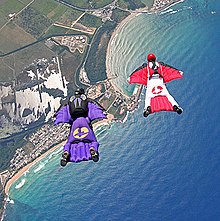 Extreme sports by their nature can be extremely dangerous, conducive to fatalities, near-fatalities and other serious injuries, and sometimes consist in treading along the brink of death. This imminent and inherent danger in these sports has been considered a somewhat necessary part of its appeal, which is partially a result of pressure for athletes to make more money and provide maximum entertainment.
Classification
While the exact definition and what is included as extreme sport is debatable, some attempted to make classification for extreme sports. One argument is that to qualify as an extreme sport both expression terms need to be fulfilled;- sport: The participant has to dispose of considerable skill and/or physical ability to avoid poor execution of the activity;
- extreme: poor execution of the activity has to result in considerable risk of serious physical harm to the participant;
| Gliding | Rolling | |
|---|---|---|
| Motorized | Offshore powerboat racing, Wakeboarding, Water skiing, Air racing, Gliding | Motorcycle racing, Rallying, Motocross |
| Non-motorized | Surfing, Windsurfing, Kiteboarding, Skiing, Snowboarding, Parachuting, Wingsuit, Sailing | Skateboarding, Mountain biking, Mountain boarding, BMX racing, Freestyle scootering |
Extreme non-vehicle sports
No vehicle is required (rock climbing, canyoning, ice climbing, parkour, psicobloc etc.) A feature of such activities in the view of some is their alleged capacity to induce an adrenaline rush in participants. However, the medical view is that the rush or high associated with the activity is not due to adrenaline being released as a response to fear, but due to increased levels of dopamine, endorphins and serotonin because of the high level of physical exertion. Furthermore, a recent study suggests that the link to adrenaline and true extreme sports is tentative.The study defined true extreme sports as a leisure or recreation activity where the most likely outcome of a mismanaged accident or mistake was death. This definition was designed to separate the marketing hype from the activity. Eric Brymer also found that the potential of various extraordinary human experiences, many of which parallel those found in activities such as meditation, was an important part of the extreme sport experience. Those experiences put the participants outside their comfort zone and are often done in conjunction with adventure travel. Some of the sports have existed for decades and their proponents span generations, some going on to become well known personalities. Rock climbing and ice climbing have spawned publicly recognizable names such as Edmund Hillary, Chris Bonington, Wolfgang Güllich and more recently Joe Simpson. Another example is surfing, invented centuries ago by the inhabitants of Hawaii.Mortality
Wingsuit flying is a recent activity.
Extreme sports and the disabled community
Occasionally persons with various physical disabilities participate in extreme sports. Nonprofit organizations such as Adaptive Action Sports seek to increase awareness of the participation in action sports by members of the disabled community, as well as increase access to the adaptive technologies that make participation possible and to competitions such as The X Games.Health
Extreme sports is a sub-category of sports than are described as any kind of sport of a character or kind farthest removed from the ordinary or average. These kinds of sports often carry out the potential risk of serious and permanent physical injury and even death. However, these sports also have the potential to produce drastic benefits on mental and physical health. Health is an individuals state of mental and physical well-being in which they are maximising their daily potential. It is divided into two main categories: mental and physical. Mental health is a cognitive state of well-being, in this state the individual is aware of his or how own potential and is able to; cope with stresses of normal life and work productively, as well as willing to give their contribution to his or her community in a beneficial way. Physical health can be defined as a state of complete physical well-being in which an individual is mechanically fit to perform their daily activities and duties without any problem. Extreme sports trigger the release of the hormone adrenaline.This is a very powerful hormone as it can cause human beings to perform tremendous stunts of many sorts. However, with a bad mix of other hormones it can lead people to execute terrible actions. It is believed that the implementation of extreme sports on mental health patients improves their perspective and recognition of aspects of life.Loading ad...
The definition of an extreme sport is not exact and the origin of the term is unclear, but it gained popularity in the 1990s when it was picked up by marketing companies to promote the X Games and when the Extreme Sports Channel and Extreme.com launched. More recently, the commonly used definition from research is a competitive (comparison or self-evaluative) activity within which the participant is subjected to natural or unusual physical and mental challenges such as speed, height, depth or natural forces and where fast and accurate cognitive perceptual processing may be required for a successful outcome by Dr. Rhonda Cohen (2012).
While use of the term extreme sport has spread everywhere to describe a multitude of different activities, exactly which sports are considered extreme is debatable. There are, however, several characteristics common to most extreme sports.While not the exclusive domain of youth, extreme sports tend to have a younger-than-average target demographic. Extreme sports are rarely sanctioned by schools.[citation needed] Extreme sports tend to be more solitary than traditional sports (rafting and paintballing are notable exceptions, as they are done in teams). In addition, beginning extreme athletes tend to work on their craft without the guidance of a coach (though some may hire a coach later).
Activities categorized by media as extreme sports differ from traditional sports due to the higher number of inherently uncontrollable variables. These environmental variables are frequently weather and terrain related, including wind, snow, water and mountains. Because these natural phenomena cannot be controlled, they inevitably affect the outcome of the given activity or event.
In a traditional sporting event, athletes compete against each other under controlled circumstances. While it is possible to create a controlled sporting event such as X Games, there are environmental variables that cannot be held constant for all athletes. Examples include changing snow conditions for snowboarders, rock and ice quality for climbers, and wave height and shape for surfers.
Whilst traditional sporting judgment criteria may be adopted when assessing performance (distance, time, score, etc.), extreme sports performers are often evaluated on more subjective and aesthetic criteria. This results in a tendency to reject unified judging methods, with different sports employing their own ideals and indeed having the ability to evolve their assessment standards with new trends or developments in the sports.
Extreme sports by their nature can be extremely dangerous, conducive to fatalities, near-fatalities and other serious injuries, and sometimes consist in treading along the brink of death. This imminent and inherent danger in these sports has been considered a somewhat necessary part of its appeal, which is partially a result of pressure for athletes to make more money and provide maximum entertainment.
Classification
While the exact definition and what is included as extreme sport is debatable, some attempted to make classification for extreme sports. One argument is that to qualify as an extreme sport both expression terms need to be fulfilled;- sport: The participant has to dispose of considerable skill and/or physical ability to avoid poor execution of the activity;
- extreme: poor execution of the activity has to result in considerable risk of serious physical harm to the participant;
| Gliding | Rolling | |
|---|---|---|
| Motorized | Offshore powerboat racing, Wakeboarding, Water skiing, Air racing, Gliding | Motorcycle racing, Rallying, Motocross |
| Non-motorized | Surfing, Windsurfing, Kiteboarding, Skiing, Snowboarding, Parachuting, Wingsuit, Sailing | Skateboarding, Mountain biking, Mountain boarding, BMX racing, Freestyle scootering |
Extreme non-vehicle sports
No vehicle is required (rock climbing, canyoning, ice climbing, parkour, psicobloc etc.) A feature of such activities in the view of some is their alleged capacity to induce an adrenaline rush in participants. However, the medical view is that the rush or high associated with the activity is not due to adrenaline being released as a response to fear, but due to increased levels of dopamine, endorphins and serotonin because of the high level of physical exertion. Furthermore, a recent study suggests that the link to adrenaline and true extreme sports is tentative.The study defined true extreme sports as a leisure or recreation activity where the most likely outcome of a mismanaged accident or mistake was death. This definition was designed to separate the marketing hype from the activity. Eric Brymer also found that the potential of various extraordinary human experiences, many of which parallel those found in activities such as meditation, was an important part of the extreme sport experience. Those experiences put the participants outside their comfort zone and are often done in conjunction with adventure travel. Some of the sports have existed for decades and their proponents span generations, some going on to become well known personalities. Rock climbing and ice climbing have spawned publicly recognizable names such as Edmund Hillary, Chris Bonington, Wolfgang Güllich and more recently Joe Simpson. Another example is surfing, invented centuries ago by the inhabitants of Hawaii.Mortality
Wingsuit flying is a recent activity.
