New research from Propeller Health, the University of Wisconsin-Madison and the University of California, Berkeley, is the first nationwide study to show an association between daily air pollution and rescue inhaler use using data obtained objectively from digital medicines in USA.
The study, conducted from 2012 to 2017 on more than 2,800 people with asthma and published this week in Proceedings of the National Academy of Sciences, uses one of the largest nationwide datasets to assess the relationship between air pollution and asthma symptoms.
Unlike previous studies, which have largely relied on hospitalization or mortality data to assess the health impact of pollution, this study used nationwide data from Propellers digital medicine database to analyze the level of fine particulate matter at the exact time and location of a persons rescue inhaler use.
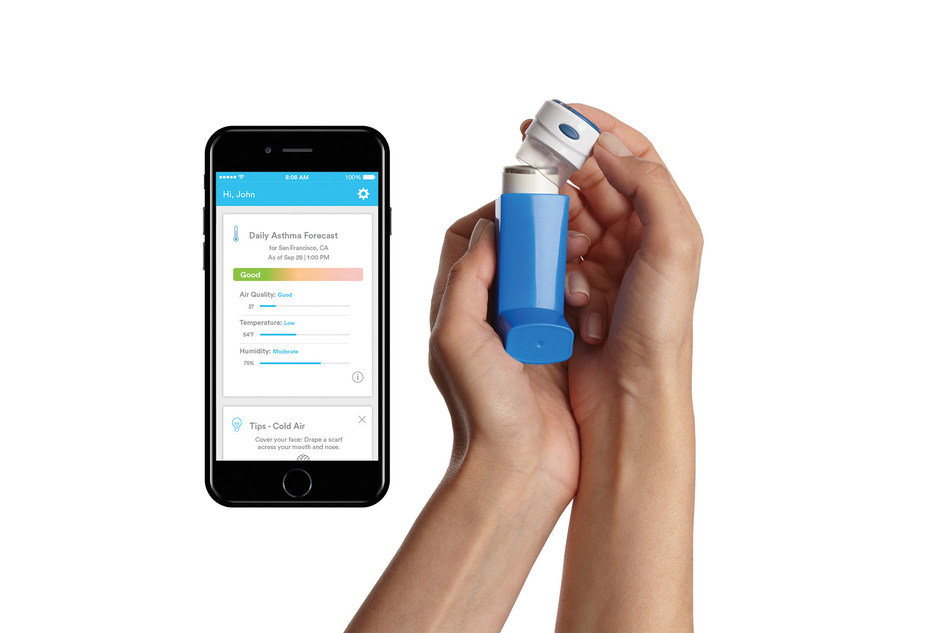
Propellers leading digital medicines consist of small sensors that easily attach to consumers existing inhalers. The sensors are paired with a mobile app to automatically track medication use, capture environmental data and provide personal feedback and insights that help individuals manage and cope with symptoms.
The study found:
Propeller Health is a leading digital therapeutics company dedicated to the development and commercialization of measurably better medicines. Propeller creates products to more effectively manage disease and improve clinical outcomes for patients across a range of therapeutic areas through connectivity, analytics, and companion digital experiences. The Propeller platform is used by patients, physicians and healthcare organizations in the US, Europe and Asia.
- Rescue inhaler use increased significantly along with increases in daily fine particulate matter exposure
- Pollution increases had the greatest impact on rescue inhaler use in the summer
- Lower-income neighborhoods experienced higher pollution exposure and higher rescue medication use on average, compared to higher-income neighborhoods
- A nationwide 1 μg/m3 (or 12 percent) reduction in fine particulate matter concentration -- less than the nationwide 18 percent reduction attained between 2010 and 2017, according to the EPA -- would statistically generate $350 million annually in economic benefits
Propeller Health is a leading digital therapeutics company dedicated to the development and commercialization of measurably better medicines. Propeller creates products to more effectively manage disease and improve clinical outcomes for patients across a range of therapeutic areas through connectivity, analytics, and companion digital experiences. The Propeller platform is used by patients, physicians and healthcare organizations in the US, Europe and Asia.
Loading ad...
New research from Propeller Health, the University of Wisconsin-Madison and the University of California, Berkeley, is the first nationwide study to show an association between daily air pollution and rescue inhaler use using data obtained objectively from digital medicines in USA.
The study, conducted from 2012 to 2017 on more than 2,800 people with asthma and published this week in Proceedings of the National Academy of Sciences, uses one of the largest nationwide datasets to assess the relationship between air pollution and asthma symptoms.
Unlike previous studies, which have largely relied on hospitalization or mortality data to assess the health impact of pollution, this study used nationwide data from Propellers digital medicine database to analyze the level of fine particulate matter at the exact time and location of a persons rescue inhaler use.
Propellers leading digital medicines consist of small sensors that easily attach to consumers existing inhalers. The sensors are paired with a mobile app to automatically track medication use, capture environmental data and provide personal feedback and insights that help individuals manage and cope with symptoms.
The study found:
Propeller Health is a leading digital therapeutics company dedicated to the development and commercialization of measurably better medicines. Propeller creates products to more effectively manage disease and improve clinical outcomes for patients across a range of therapeutic areas through connectivity, analytics, and companion digital experiences. The Propeller platform is used by patients, physicians and healthcare organizations in the US, Europe and Asia.
- Rescue inhaler use increased significantly along with increases in daily fine particulate matter exposure
- Pollution increases had the greatest impact on rescue inhaler use in the summer
- Lower-income neighborhoods experienced higher pollution exposure and higher rescue medication use on average, compared to higher-income neighborhoods
- A nationwide 1 μg/m3 (or 12 percent) reduction in fine particulate matter concentration -- less than the nationwide 18 percent reduction attained between 2010 and 2017, according to the EPA -- would statistically generate $350 million annually in economic benefits
Propeller Health is a leading digital therapeutics company dedicated to the development and commercialization of measurably better medicines. Propeller creates products to more effectively manage disease and improve clinical outcomes for patients across a range of therapeutic areas through connectivity, analytics, and companion digital experiences. The Propeller platform is used by patients, physicians and healthcare organizations in the US, Europe and Asia.
