According to José Graziano da Silva, the Director General of the UN Food and Agriculture Organization, human activities are the primary source of this “invisible” pollution.
Thousands of chemicals used in every-day lives - and tonnes of urban, industrial and agricultural waste - end up in soil, leaving it “bare and degraded,” he said, in a message marking the World Soil Day.Emergency Manager thinks that soil pollution can be managed by humans only when we are aware about its real consequences.We must make strict laws to prevent soil pollution.A worldwide education and awareness campaign is needed to stop soil pollution.Otherwise the very foundation of life will be destroyed says Dr Anand Sharma ,a distinguished Indian scientist and expert.
In addition, with soil essential to providing food for 95 per cent of the world, soil pollution not only reduces the quantity and quality of crops and produce, it also worsens poverty and compromises the future for generations to come, warned the head of FAO.
Soil pollution is threatening life on earth as most of life originates from soil.Soil is a “treasure beneath our feet,” essential to human lives and well-being as Globally almost 95 per cent of the food comes from soil.Up to 80 per cent of urban waste is dumped in landfills where pollutants enter the soil.This invaluable natural resource is under constant threat from the little-understood phenomenon of soil pollution.
But, with everyone taking action to prevent soil degradation, the challenges can be overcome, said Mr. Graziano da Silva, urging everyone to “be a part of the solution.”
The theme for this year’s commemoration is just that: “be the solution to soil pollution” and FAO is offering key recommendations through which people can make a difference.
For instance, studies show that up to 80 per cent of urban waste – ending up in landfills and entering the soil – can be recycled. This is particularly important for electronic, “e-waste”.
Why Soil is important ?
• Holds three times as much carbon as the atmosphere and can help overcome some climate change challenges; • Can improve food security for 815 million people and provide better nutrition for two billion people • Provides 95 per cent of all food but 33 per cent of the soil globally has are already degraded Source: FAO How to reduce soil pollution ? Emergency Manager consulted various experts on this issue.After lots of deliberation few remedial actions were derived from this discussion on the issue of soil pollution.- Old computers and devices can be donated to charities or institutions where they will continued to be used, their components can also be recycled, says the UN agency.
- Use biodegradable items.
- Prevent spill of all liquid chemicals and waste .Use leak proof containers.
- Promote organic food by consuming and growing it.
- Stop use of chemical pesticides .
- Prevent spil of engine oil or any fuel oil.
- Use a drip tray to collect engine oil.
- Minimise packaging as packing materials are major pollutants.
- Reuse packaging and carry bags.
- Avoid dumping mineral oil on soil.
- Use Recycling and sustainable choices to curb plastic pollution.
- Motivate each and every person to contribute to solve the problem.
- Educate children about soil pollution.
FAO/Ryanwil Baldovino
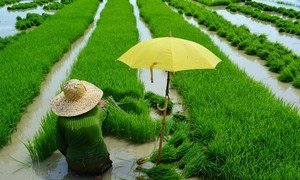
A farmer transplants rice in a paddy field in the Philippines. Globally almost 95 per cent of the food comes from soil.
Glinka World Soil Prize
As part of global commemorations, the Global Soil Partnership awarded the Glinka World Soil Prize to Indian origin Professor Rattan Lal, the President of the International Union of Social Science recognizing his “outstanding contribution to sustainable soil management.” Professor Lal’s scientific work contributed to soil organic carbon restoration and improvement of soil structure, as well as converting science and research into policy and decision-making, according to FAO. The Glinka World Soil Prize is named after the pioneering Russian scientist Konstantin D. Glinka. It honours individuals and organizations for leadership in promoting sustainable soil management and the protection of soil resources. In addition, this year’s commemoration saw the inaugural presentation of the World Soil Day Award, which was presented to Practical Action Bangladesh for its work in raising awards on the topic and organizing the best World Soil Day celebrations last year.Loading ad...
Soil pollution is threatening life on earth as most of life originates from soil.Soil is a “treasure beneath our feet,” essential to human lives and well-being as Globally almost 95 per cent of the food comes from soil.Up to 80 per cent of urban waste is dumped in landfills where pollutants enter the soil.This invaluable natural resource is under constant threat from the little-understood phenomenon of soil pollution.
According to José Graziano da Silva, the Director General of the UN Food and Agriculture Organization, human activities are the primary source of this “invisible” pollution.
Thousands of chemicals used in every-day lives - and tonnes of urban, industrial and agricultural waste - end up in soil, leaving it “bare and degraded,” he said, in a message marking the World Soil Day.Emergency Manager thinks that soil pollution can be managed by humans only when we are aware about its real consequences.We must make strict laws to prevent soil pollution.A worldwide education and awareness campaign is needed to stop soil pollution.Otherwise the very foundation of life will be destroyed says Dr Anand Sharma ,a distinguished Indian scientist and expert.
In addition, with soil essential to providing food for 95 per cent of the world, soil pollution not only reduces the quantity and quality of crops and produce, it also worsens poverty and compromises the future for generations to come, warned the head of FAO.
‘Be a part of the solution’
But, with everyone taking action to prevent soil degradation, the challenges can be overcome, said Mr. Graziano da Silva, urging everyone to “be a part of the solution.”
The theme for this year’s commemoration is just that: “be the solution to soil pollution” and FAO is offering key recommendations through which people can make a difference.
For instance, studies show that up to 80 per cent of urban waste – ending up in landfills and entering the soil – can be recycled. This is particularly important for electronic, “e-waste”.
Why Soil is important ?
• Holds three times as much carbon as the atmosphere and can help overcome some climate change challenges; • Can improve food security for 815 million people and provide better nutrition for two billion people • Provides 95 per cent of all food but 33 per cent of the soil globally has are already degraded Source: FAO How to reduce soil pollution ? Emergency Manager consulted various experts on this issue.After lots of deliberation few remedial actions were derived from this discussion on the issue of soil pollution.- Old computers and devices can be donated to charities or institutions where they will continued to be used, their components can also be recycled, says the UN agency.
- Use biodegradable items.
- Prevent spill of all liquid chemicals and waste .Use leak proof containers.
- Promote organic food by consuming and growing it.
- Stop use of chemical pesticides .
- Prevent spil of engine oil or any fuel oil.
- Use a drip tray to collect engine oil.
- Minimise packaging as packing materials are major pollutants.
- Reuse packaging and carry bags.
- Avoid dumping mineral oil on soil.
- Use Recycling and sustainable choices to curb plastic pollution.
- Motivate each and every person to contribute to solve the problem.
- Educate children about soil pollution.
FAO/Ryanwil Baldovino
A farmer transplants rice in a paddy field in the Philippines. Globally almost 95 per cent of the food comes from soil.
