Solar-powered aircraft is the future.Sensing this opportunity, many big and small start-up companies are working on development of solar power aircraft.Interestingly, the aircraft engine,which is the heart of modern aircraft,will be missing in the solar powered aircraft. This exclusion of engine,the most complex part of aircraft,is democratizing the development of solar powered aircraft.We , at Emergency Manager, will start calling them solarcrafts.
Now solar power is moving from homes to sky.
Solar-Powered Aircraft Developments Solar One is an experimental solarcraft developed by Solar-Powered Aircraft Developments,a British firm. It is a mid-wing manned (solar-powered aircraft0 solarcraft designed by David Williams.Solar Impulse series is a experimental solar-powered aircraft developed under a project privately financed by Swiss engineer and businessman André Borschberg and Bertrand Piccardand, a Swiss psychiatrist and balloonist. Bertrand Piccardand has vast experience in this field as he co-piloted Breitling Orbiter 3.Airbus has also joined the race with its unmanned aircraft, a 75 kilogram Zephyr.Airbus calls it as local satellite-like services .Thi runs on solar power. It operates in the stratosphere at an average altitude of 70,000 feet and has a wingspan of 25 meters. 25 days, 23 hours, and 57 minutes.
In 2016, the Solar Impulse 2, a manned aircraft powered by the sun, managed to circumnavigate the globe without using fuel. The trip was completed in 17 separate legs.
Powered only by the sun, Odysseus is an ultra-long endurance, high-altitude platform built for groundbreaking persistence. Utilizing advanced solar cells and built with lightweight materials, Odysseus can effectively fly indefinitely – all powered by clean, renewable energy.
Advantages of solarcraft
- It is non polluting as does not used fuel.
- No sound pollution.
- Can stay longer in space.
- Can be made bigger than present day fuel driven aircraft.
- Can be used for space travel in future.
- Can be substitute of satellites with less expensive camera for observation because of its lower altitude than satellite.
- These will be safer than present day aircrafts.
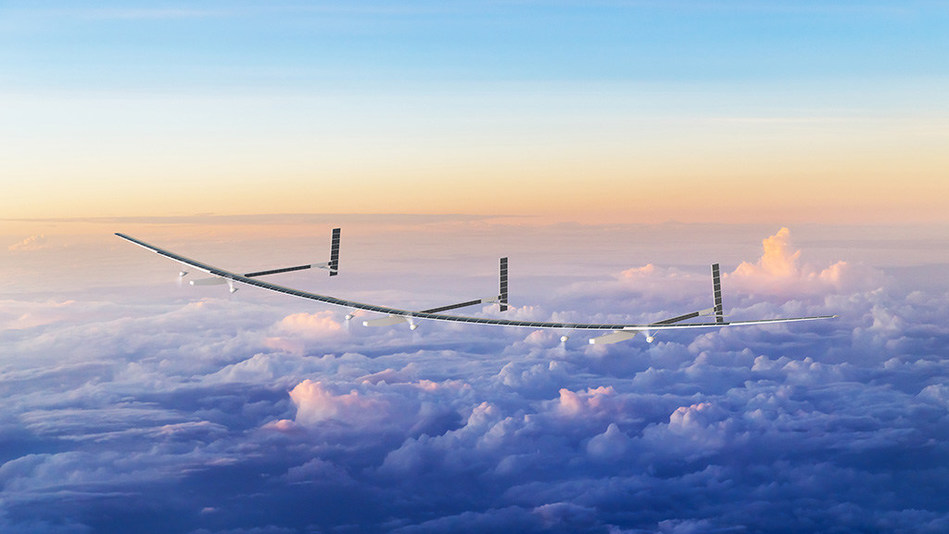
The inspiration for Odysseus started with the Daedalus Project that ultimately set records in distance and for human-powered flight in 1988 with a 72-mile flight between the Greek islands of Crete and Santorini. The project was organized and led by Aurora President and CEO John Langford and other MIT colleagues who later founded Aurora. Daedalus records still stand today.
Aurora continues its nearly 30-year legacy of advancing autonomous systems with Odysseus, the worlds most capable solar-powered autonomous aircraft
Aurora was founded by the idea that technology and innovation can provide powerful solutions to tough problems that affect all of humankind. Odysseus was an idea born out of Daedalus that is now a real solution to advancing the important research around climate change and other atmospheric chemistry problems, said Aurora President and CEO John Langford. Odysseus offers persistence like no other solar aircraft of its kind, which is why it is such a capable and necessary platform for researchers. Odysseus will indeed change the world.
A number of key enabling factors, inspired by the Daedalus project, come together to empower Odysseus leading-edge persistence:
Key Enablers
- Odysseus can persistently and autonomously remain on station. This enables communication and data gathering over a specific location. No other solar aircraft offers this capability.
- Odysseus has a greater year-round global operating zone than any other vehicle in its class.
- Odysseus can carry a larger payload than any other aircraft in development or production in its class. This enables more missions and better resulting data quality from each mission.
- Odysseus can be deployed at a fraction of the cost of a satellite and can spend dramatically more time aloft than a conventional UAV. It can receive payload and hardware options and can be quickly customized, re-tasked, and re-located as missions evolve.
Loading ad...
Solar-powered aircraft is the future.Sensing this opportunity, many big and small start-up companies are working on development of solar power aircraft.Interestingly, the aircraft engine,which is the heart of modern aircraft,will be missing in the solar powered aircraft. This exclusion of engine,the most complex part of aircraft,is democratizing the development of solar powered aircraft.We , at Emergency Manager, will start calling them solarcrafts.
Now solar power is moving from homes to sky.
Solar-Powered Aircraft Developments Solar One is an experimental solarcraft developed by Solar-Powered Aircraft Developments,a British firm. It is a mid-wing manned (solar-powered aircraft0 solarcraft designed by David Williams.Solar Impulse series is a experimental solar-powered aircraft developed under a project privately financed by Swiss engineer and businessman André Borschberg and Bertrand Piccardand, a Swiss psychiatrist and balloonist. Bertrand Piccardand has vast experience in this field as he co-piloted Breitling Orbiter 3.Airbus has also joined the race with its unmanned aircraft, a 75 kilogram Zephyr.Airbus calls it as local satellite-like services .Thi runs on solar power. It operates in the stratosphere at an average altitude of 70,000 feet and has a wingspan of 25 meters. 25 days, 23 hours, and 57 minutes.
In 2016, the Solar Impulse 2, a manned aircraft powered by the sun, managed to circumnavigate the globe without using fuel. The trip was completed in 17 separate legs.
Powered only by the sun, Odysseus is an ultra-long endurance, high-altitude platform built for groundbreaking persistence. Utilizing advanced solar cells and built with lightweight materials, Odysseus can effectively fly indefinitely – all powered by clean, renewable energy.
Advantages of solarcraft
- It is non polluting as does not used fuel.
- No sound pollution.
- Can stay longer in space.
- Can be made bigger than present day fuel driven aircraft.
- Can be used for space travel in future.
- Can be substitute of satellites with less expensive camera for observation because of its lower altitude than satellite.
- These will be safer than present day aircrafts.
The inspiration for Odysseus started with the Daedalus Project that ultimately set records in distance and for human-powered flight in 1988 with a 72-mile flight between the Greek islands of Crete and Santorini. The project was organized and led by Aurora President and CEO John Langford and other MIT colleagues who later founded Aurora. Daedalus records still stand today.
Aurora continues its nearly 30-year legacy of advancing autonomous systems with Odysseus, the worlds most capable solar-powered autonomous aircraft
Aurora was founded by the idea that technology and innovation can provide powerful solutions to tough problems that affect all of humankind. Odysseus was an idea born out of Daedalus that is now a real solution to advancing the important research around climate change and other atmospheric chemistry problems, said Aurora President and CEO John Langford. Odysseus offers persistence like no other solar aircraft of its kind, which is why it is such a capable and necessary platform for researchers. Odysseus will indeed change the world.
A number of key enabling factors, inspired by the Daedalus project, come together to empower Odysseus leading-edge persistence:
Key Enablers
- Odysseus can persistently and autonomously remain on station. This enables communication and data gathering over a specific location. No other solar aircraft offers this capability.
- Odysseus has a greater year-round global operating zone than any other vehicle in its class.
- Odysseus can carry a larger payload than any other aircraft in development or production in its class. This enables more missions and better resulting data quality from each mission.
- Odysseus can be deployed at a fraction of the cost of a satellite and can spend dramatically more time aloft than a conventional UAV. It can receive payload and hardware options and can be quickly customized, re-tasked, and re-located as missions evolve.
